
Heritage
Two thousand years of one wall
Venetian plaster is slaked lime and ground marble. That is not a modern recipe dressed up in an Italian name — it is the material Roman engineers wrote a specification for, the one Venice built its palaces in, and the one still going on walls by hand today. Here is the documented line, and nothing that is not on it.
1st century BC
Rome wrote the method down
The Romans called it opus albarium — a stucco carrying marble dust, beaten compact with rammers to finish interior walls and ceilings. The technique is described by Vitruvius in De architectura, written in the first century BC. Pliny the Elder expanded on it in his Naturalis Historia a century later.
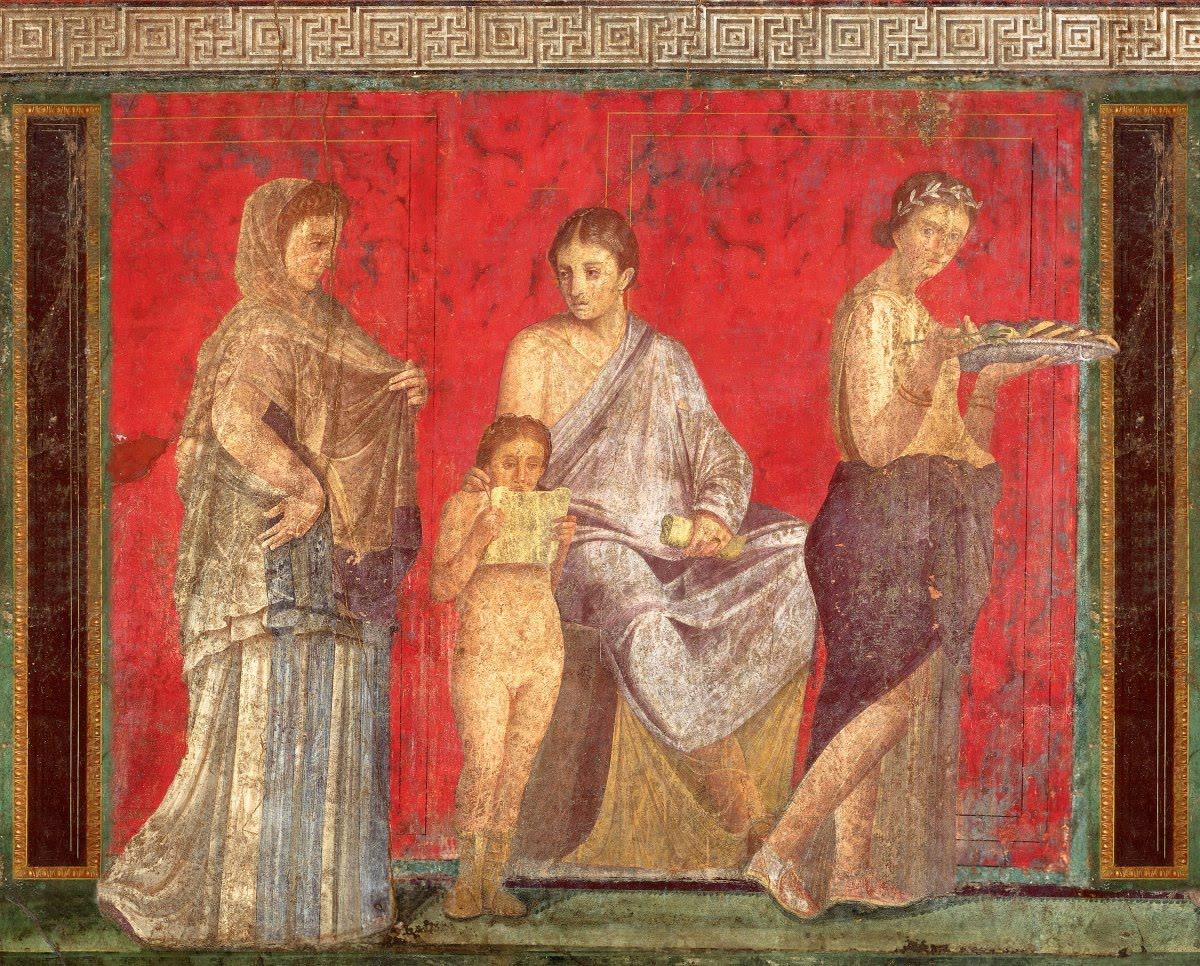
It was not a decorating fashion. It was a specification, written by an engineer. And the evidence that it worked is not an argument — it is a place: the technique survives in the villas of Pompeii, where the ash fell in AD 79 and the walls are still standing.
1414–1473
Venice found the manuscript
Vitruvius went unread for centuries. In 1414 the manuscript hunter Poggio Bracciolini publicised a copy of De architectura at the Abbey of St Gallen, and the treatise went back into circulation among Renaissance architects — Alberti and Brunelleschi among those who studied it.
The technique it described suited what was then fashionable in the Venetian lagoon, and it was taken up. The first record of marmorino work being commissioned is a building contract with the nuns of Santa Chiara of Murano, dated 1473.
The Republic
A city that could not carry stone
Venice stands on millions of timber piles driven into the soft floor of the lagoon. Weight was the constraint everything else answered to, and the city legislated for it — buildings limited in height, and built from lightweight hollow bricks.
That is the problem marmorino solved. It is a lime-and-marble-dust plaster that looks like solid rock and adds little weight, so a façade could read as stone without loading the foundations the way stone slabs would. It was frequently made with leftover stone and marble, which the city had in abundance.
It answered the damp as well. The lime putty is breathable and mould-resistant, and the mixes made with terracotta are hydraulic — effective in exactly the wet, salt conditions that destroyed other finishes.
Worth sitting with: the finish was not adopted because it was beautiful. It was adopted because it was light, breathable and made from waste. The beauty came along with it.
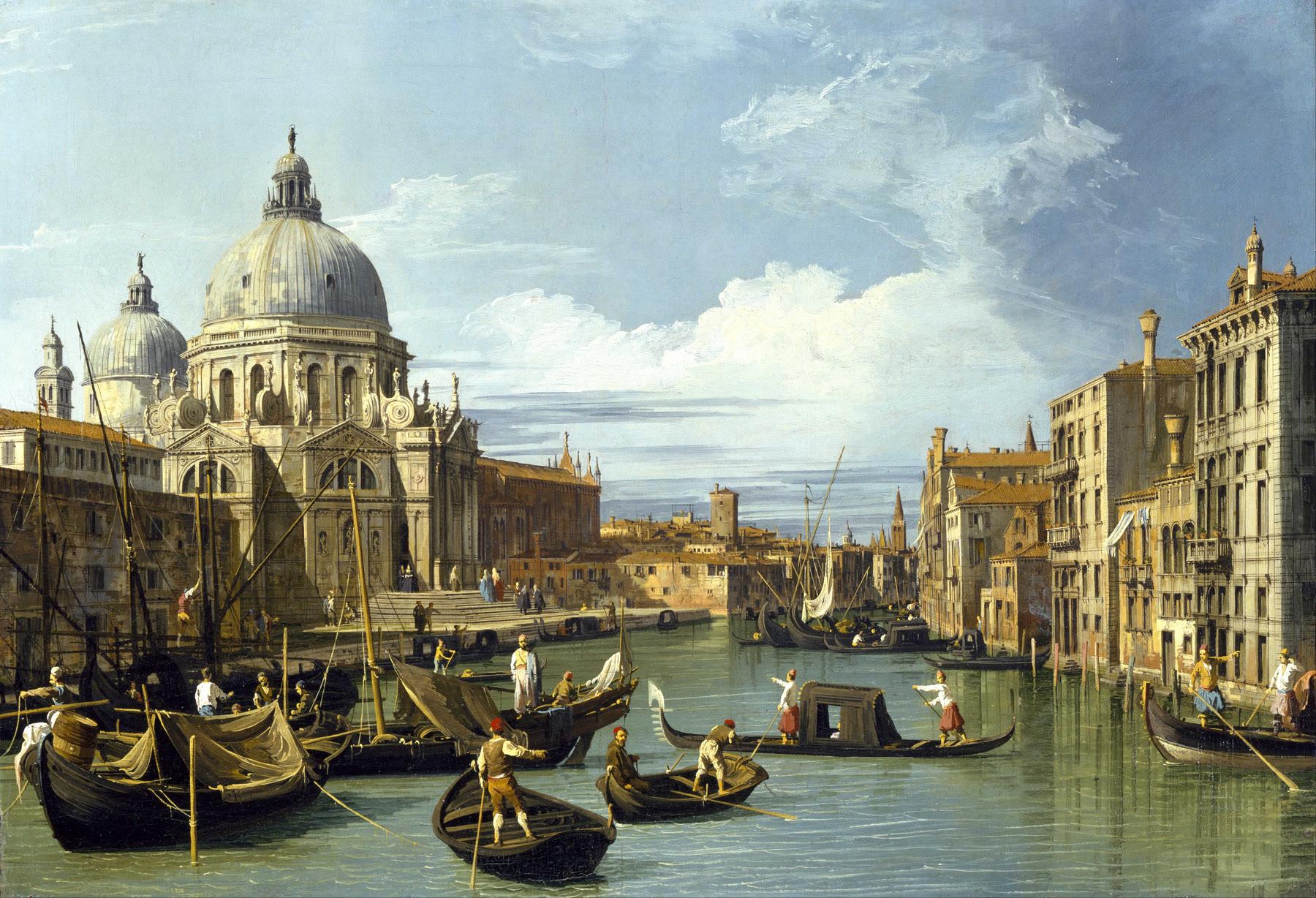
The palaces of Venice were finished in what the quarry had left over.
16th century
Palladio put it in the villas
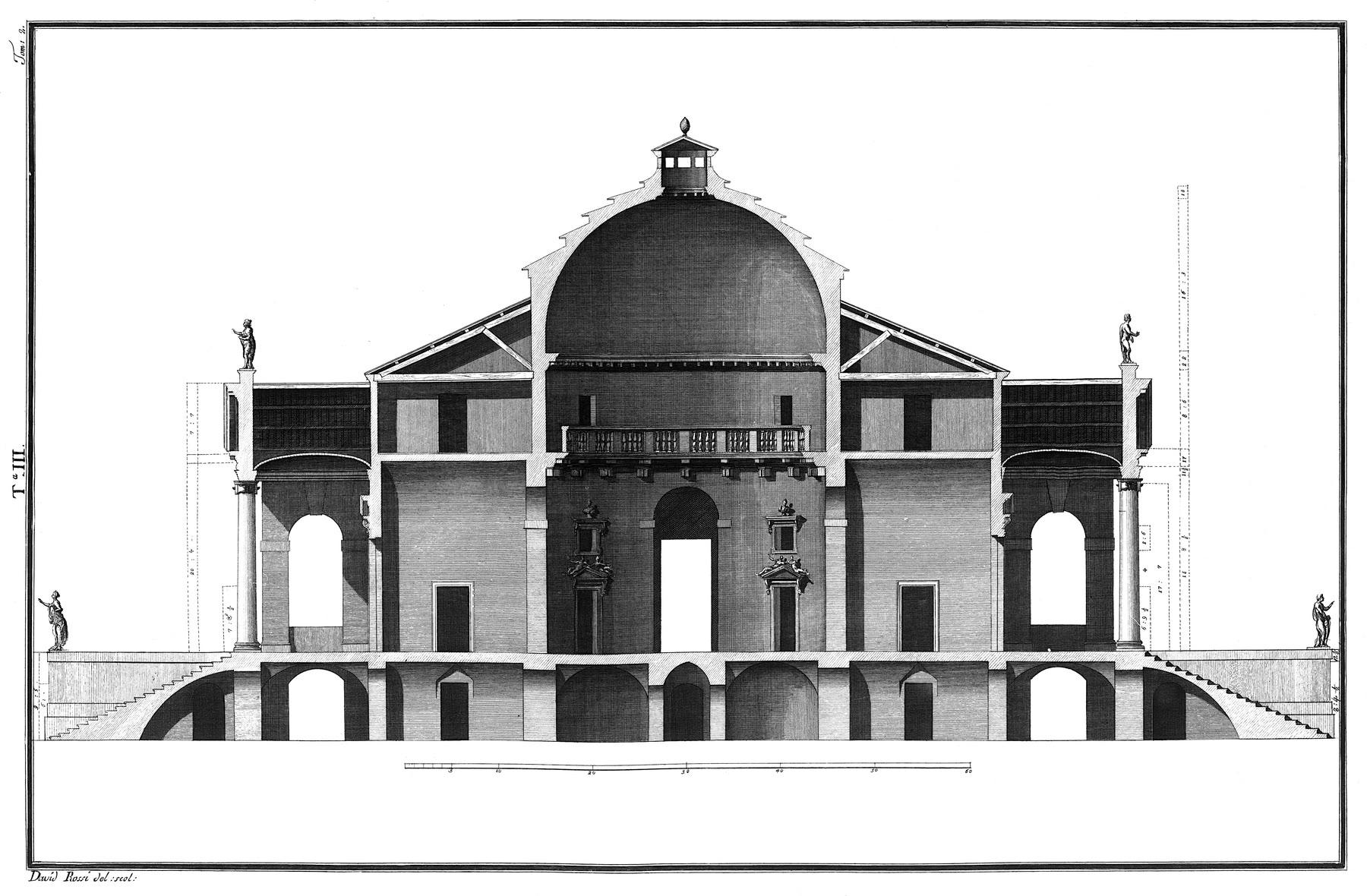
In the sixteenth century Andrea Palladio revived the technique and used marmorino throughout the Veneto. It characterises the architectural work of the great sixteenth-century artists working in that region, and it went onto the palazzi of Venice as they were decorated.
Palladio's buildings became the most copied in Western architecture. The finish on their walls was lime and marble dust, laid by hand.
20th century
Scarpa made it modern
The technique was carried into modern architecture by Carlo Scarpa. Working with the craftsman Eugenio De Luigi, he changed the process from seven layers to three and developed the polished finish known as Pastellone Scarpiano, or stucco lustro.
By the end of the 1970s Scarpa's use of marmorino had returned the technique to the interest of the best modern architects — not as a heritage reproduction, but as the right surface for a contemporary wall.
Now
The same method, in Melbourne
Lime still has to slake. Coats still have to be worked while the material is open. The timing is still the craft, and it is still learned by hand over years rather than read.
Twenty-seven of those years are Pavle's. The wall he finishes in your house is made from the same two materials Vitruvius specified, by a method Venice adopted because nothing else would do the job — and nothing since has replaced it.
Sources
Every date, name and claim on this page comes from the references below. Where a source would only support a weaker version of a sentence, the weaker version is what is written.
- Vitruvius, De architectura — and opus albarium
- Marmorino: origins, the 1473 Santa Chiara contract, Palladio and Scarpa
- Poggio Bracciolini and the rediscovery of Vitruvius, 1414
- How Venice was built: timber piles and lightweight construction
Images are in the public domain and are credited individually above.
Put two thousand years on one wall.
Tell me the room and the suburb, and I'll tell you what the surface will carry.